casdar

June 4, 2026
CaSDaR Data Stewardship Training #1- Principles of Research data management
Join us for the first session in the CaSDaR Data Stewardship Training series, designed specifically for data stewards looking to strengthen their research data management practice. This hands-on training will equip you with the foundational knowledge and practical tools needed to manage research data effectively, consistently, and in line with best practices across disciplines. Whether you are new to data stewardship or looking to consolidate your existing skills, this session provides a solid grounding in the core principles that underpin good RDM. This Training Session will be run by Digital Curation Centre (DCC).
June 1, 2026
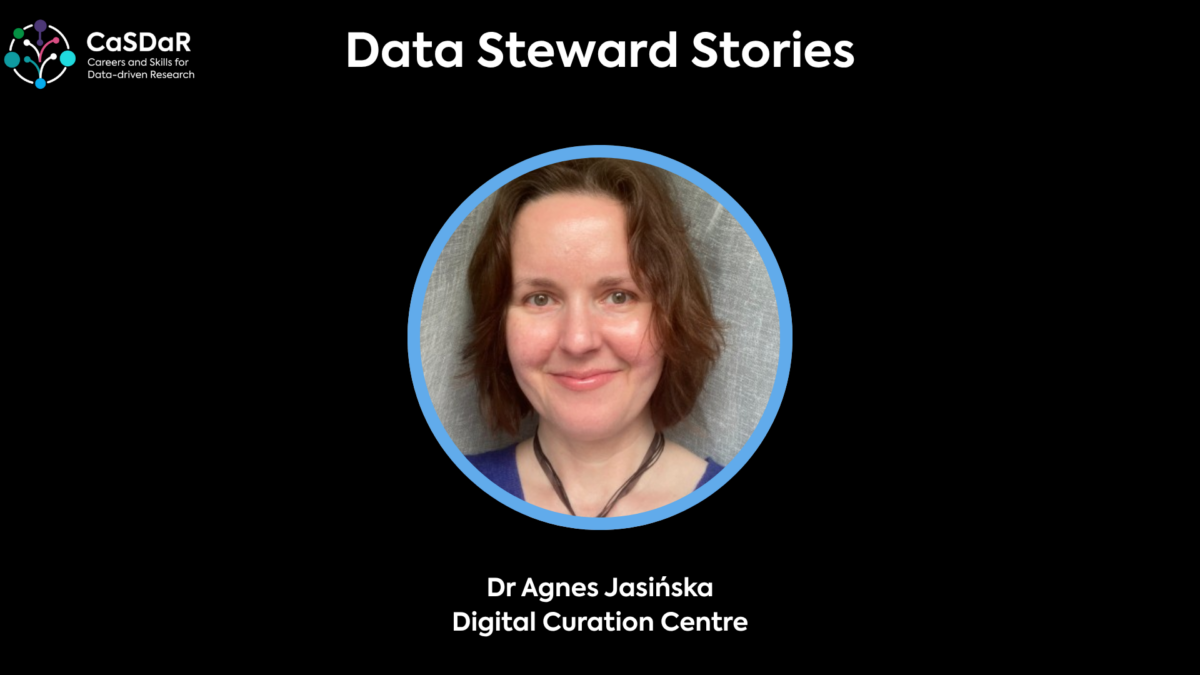
Data Steward Stories: Dr Agnes Jasińska (Digital Curation Centre) 
CaSDaR is committed to promoting recognition for individuals who fulfil Data Stewardship activities within their role, often going above and beyond in this capacity, and to providing an evidence base of what Data Stewardship look like in the UK research ecosystem. Our Data Steward Stories sessions provide an opportunity to share these with the community and empower individuals to seek recognition for their work. In this Data Stewards Stories session, Dr James Steele provided an overview of his career in supporting data stewardship from a holistic perspective, from navigating research dissemination to the appropriate use of statistics. James also shared insights into how his commitment to evidence-based decisions and research integrity has shaped his career trajectory. 
April 27, 2026
CaSDaR’s Data Steward Stories: Dr Jeanne Wilbrandt
In this session, Jeanne will describe her journey and how her research experience informed her development as a Data Steward. This session will have a 30 minute presentation from Jeanne, followed by an opportunity for audience members to ask questions.
April 14, 2026
Announcing CaSDaR’s Event Funding Contribution Opportunity
As part of this mission , CaSDaR launched our first funding call in November 2025, with applications closing on the 22nd January 2026. Read this post to find out who was successful in this first call!
April 8, 2026
Workshop about UK dRTP skills and competencies community collaboration @ SSI Collaborations Workshop
The Software Sustainability Institute's annual Collaborations Workshop (CW) is an immersive, three-day unconference, which emphasises active collaborations, dynamic discussions, and hands-on problem-solving. The highly anticipated Collaborations Workshop 2026 (CW26) will take place as a hybrid event from Tuesday 28 April to Thursday 30 April at ICC Belfast. The event is set to feature an impressive lineup of speakers and an interactive programme of sessions. The theme is Strengthening The Research Software Community. The programme includes a one-hour mini-workshop titled How should the DIRECT Framework adapt to serve diverse dRTP communities?
April 8, 2026
CaSDaR’s Data Steward Stories: Dr Agnes Jasinska
In this Data Stewards Stories session, Dr Agnes Jasinska from the Digital Curation Centre will provide an overview of her career in supporting international Data Stewardship, as well as her wide ranging interests in the responsible use and sharing of data. This session will have a 30 minute presentation from Agnes, followed by an opportunity for audience members to ask questions. Join us to hear more from Agnes about how she developed her skills and how this informed her career in Stewarding data.
March 26, 2026
CaSDaR Contributes to Portuguese Data Stewards Network Session on Electronic Research Notebooks 
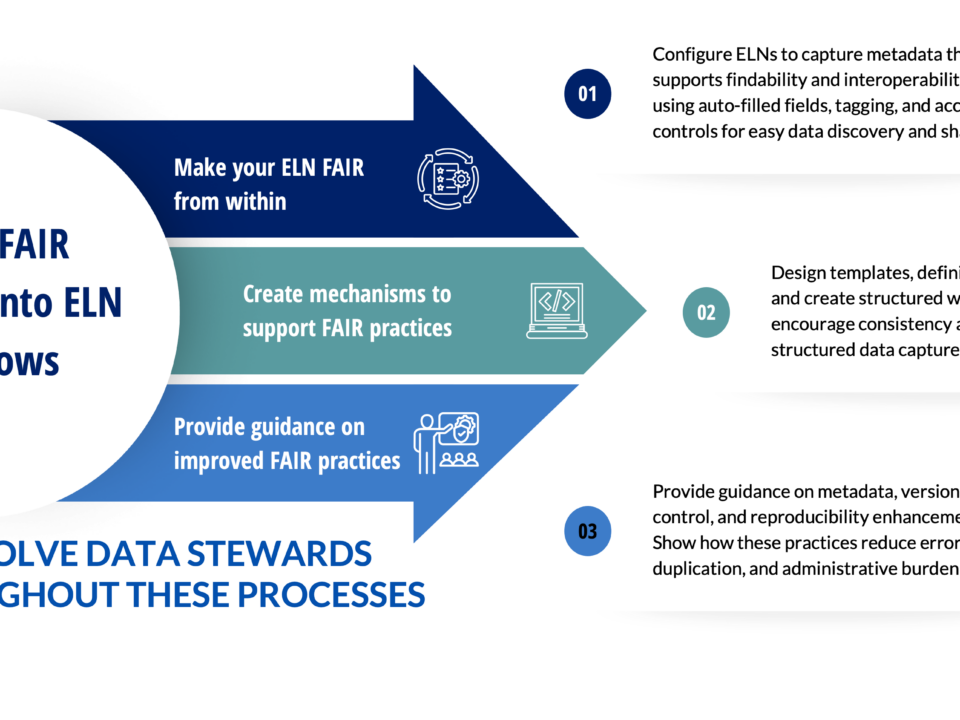
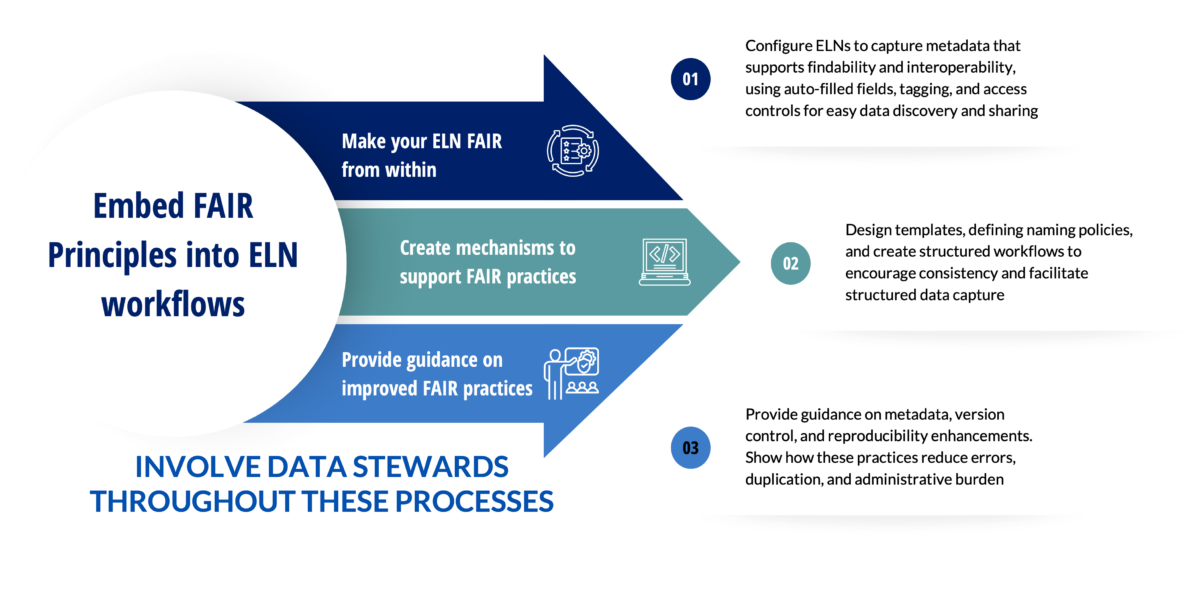
In March 2026, CaSDaR was pleased to contribute to a recent event on the Portuguese Data Stewards Network (RPDS), organised through the Re.Data initiative. The event focused on Electronic Research Notebooks (ERNs) and explored their role in supporting effective research data management, reproducibility, and open science practices. As part of the event, Dr Samantha Pearman-Kanza (CaSDaRs PI) delivered a presentation exploring how electronic research notebooks can enhance data capture, organisation, and reproducibility in research workflows. The talk highlighted the role of ERNs in supporting FAIR data practices, enabling structured and well-documented research outputs, and facilitating integration with wider digital research infrastructures.