data stewardship

June 18, 2026
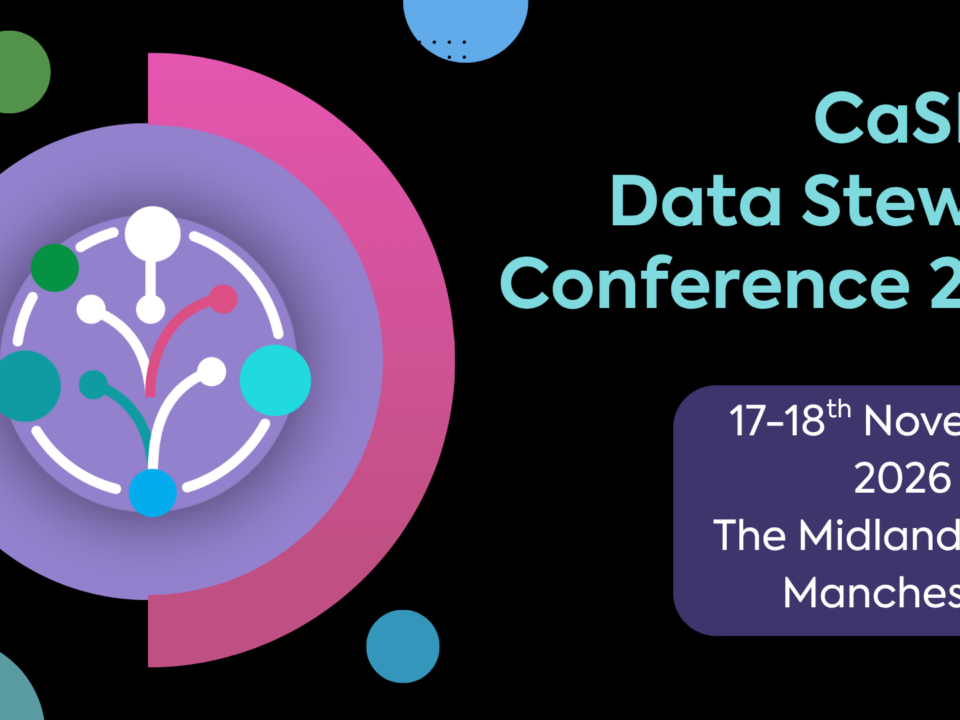
Bursary applications open for CaSDaR’s Data Steward Conference 2026
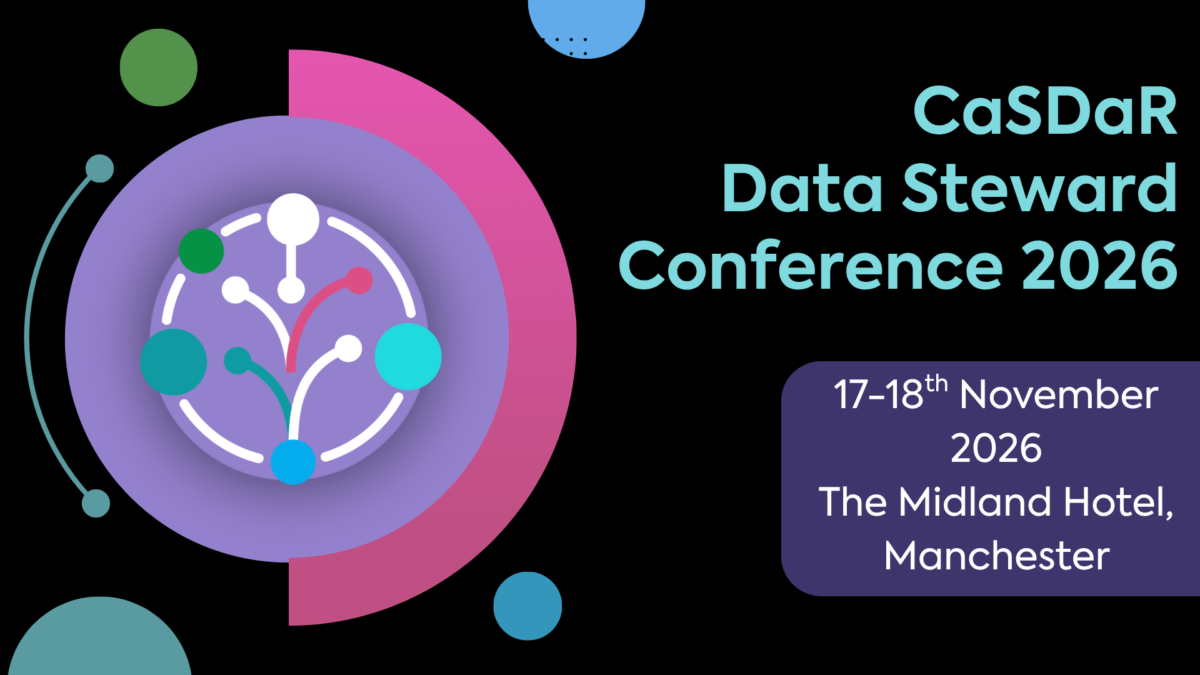
Over the past year, CaSDaR has been working to strengthen recognition of the role of Data Steward and build a connected UK-wide community. This residential conference on the 17th-18th November 2026 provides an opportunity to reflect on progress and contribute to what comes next. We’re keen to support in-person attendance of practitioners, such as librarians, archivists, data managers, and technical staff, through providing bursaries of up to £320pp for travel and accommodation at CaSDaR's Data Steward Conference on the 17th-18th November 2026 at the Midland Hotel in Manchester.. Our bursaries were undersubscribed last year so we’d fully recommend people applying for these. We will handle all of the administration of booking - all you need to let us know are your requirements.
June 18, 2026
Registration open for the CaSDaR Data Steward Conference 2026
Registrations now open for CaSDaR’s Data Steward Conference 2026, 17th-18th November 2026 online and at the Midland Hotel in Manchester This hybrid event takes place on the 17th-18th November 2026 at the Midland Hotel in Manchester and online. Bursaries are available for in-person attendees to support travel and accommodation.
June 18, 2026
CaSDaR’s Hybrid Data Steward Conference 2026
This hybrid conference organised by Careers and Skills for Data-driven Research (CaSDaR) brings together the growing data stewardship community to share progress, showcase impact, and shape the next phase of activity. This event is fully hybrid, so all sessions will be available online and in-person at The Midland Hotel, Manchester. Day one will focus on data stewardship in practice whereas Day two will highlight CaSDaR's activities to date and allow delegates to have an impact in CaSDaR’s future plans and deliverables through engaging in parallel breakout sessions. There will of course also be the opportunity to meet Cassie and grab some of her swag!
June 8, 2026
Tools for Data FAIRification – overcoming barriers in data discoverability and reuse
It’s easy to feel overwhelmed by barriers to making data FAIR, but when you realise that others have had the same problems AND have solutions, life feels much better! Holly Ranger and the N8 CIR group have organised an online seminar titled “Tools for Data FAIRification – overcoming barriers in data discoverability and reuse” will take place on Tuesday, 23 June from 13:00–15:00 (BST) with a focus on practical tools and approaches to improve how research data is managed, shared, and reused in line with FAIR principles (Findable, Accessible, Interoperable, Reusable). Four separate speakers will share their stories and present the solutions they have found to improve their practices.
June 8, 2026
UK Reproducibility Network Conference 2026
Serving as a platform to convene the research community, drive broader collaboration, and solidify UKRN’s long-term sustainability plan, the UKRN conference will showcase the impact of its core initiatives and engage the research sector community as change agents to improve UK research.
June 8, 2026
ORCID for Researchers webinar
The UK ORCID consortium is running a webinar to promote ORCID more widely across the UK. It is open to all, so you do not need to be a member of the consortium to attend. Find out why getting a free ORCID iD and populating your ORCID record is key for researchers to get credit for their work. ORCID is a free, unique, persistent identifier (PID) for individuals to use as they engage in research, scholarship, and innovation activities. Obtaining an ORCID iD and populating your profile helps achieve the vision where all who participate in research, scholarship, and innovation are uniquely identified and connected to their contributions across disciplines, borders, and time.
June 8, 2026
Jisc Digital Research Community June Meetup: The people who make Digital Research Infrastructure work
Digital Research Technical Professionals (dRTPs) are a crucial part of the computational research community, and a corner stone of Digital Research Infrastructure (DRI). This session will talk about what dRTPs are, where they come from, and what they do, and then present some UKRI-funded DRI projects which provide events and funding for dRTPs and people who are interested in engaging with this space. Come prepared to ask questions and join in discussions! In this meet-up, we’ll hear from Dr Marion Weinzierl, Principal Research Software Engineer at the Institute of Computing for Climate Science at the University of Cambridge, in her role in the Computational Abilities Knowledge Exchange (CAKE) project https://www.cake.ac.uk/.  There will also be representatives from several dRTP related projects.
June 4, 2026
CaSDaR Data Stewardship Training #5 – Data Selection and Preservation
Join us for the fifth session in the CaSDaR Data Stewardship Training series, where we turn our attention to two deeply interconnected pillars of responsible data stewardship: data selection and long-term preservation. In an era of ever-growing data volumes, knowing what to keep, how to keep it, and for how long is one of the most consequential decisions a data steward can make. Poor selection and preservation practices put research outputs at risk of being lost, inaccessible, or unusable over time — undermining both the scientific record and the investment made in collecting the data in the first place. This session will equip you with the frameworks, tools, and practical judgment needed to make sound decisions about data selection and to implement robust preservation strategies that stand the test of time. This training session will be run by Digital Curation Centre (DCC).
June 4, 2026
CaSDaR Data Stewardship Training #3 – FAIR Data
Join us for the third session in the CaSDaR Data Stewardship Training series, dedicated to the FAIR principles. FAIR (Findable, Accessible, Interoperable, and Reusable) has become the cornerstone of open science and responsible data stewardship. This session will take you from the foundational concepts behind FAIR all the way through to practical implementation, giving you the tools and strategies to make research data and other research objects genuinely FAIR in your day-to-day work. This training session will be run by Digital Curation Centre (DCC).