
A PDF of this newsletter can be downloaded here .
In this Issue
In this newsletter we’re going to discuss the preparation for our upcoming conference, give an update on some of our funded projects and talk about future events.
Our work on the Conference
Cassie is gearing up for our conference on the 17th-18th November 2026 in Manchester. She’s already organised the car allocations for the road trip, curated a playlist for the road (one of them is called ScotRock), and made the food and wine choices for the evening event on the 17th November.
But, most importantly, Cassie is on it with organising the sessions. We’ve got a great range of speakers covering diverse disciplines, including the Risk Management Toolkit for Open GLAMs, how the Cross-Domain Interoperability Framework ensures data is discovered and used by AI whilst ensuring provenance, and the role that metadata schema play in ensuring citizen science outputs are preserved for future work. These are only a few of the talks that we have planned – we’re also running sessions for the recipients of our funding to present their projects, offering lightning talks for people to present their work, as well as running panel discussions on careers and skills.
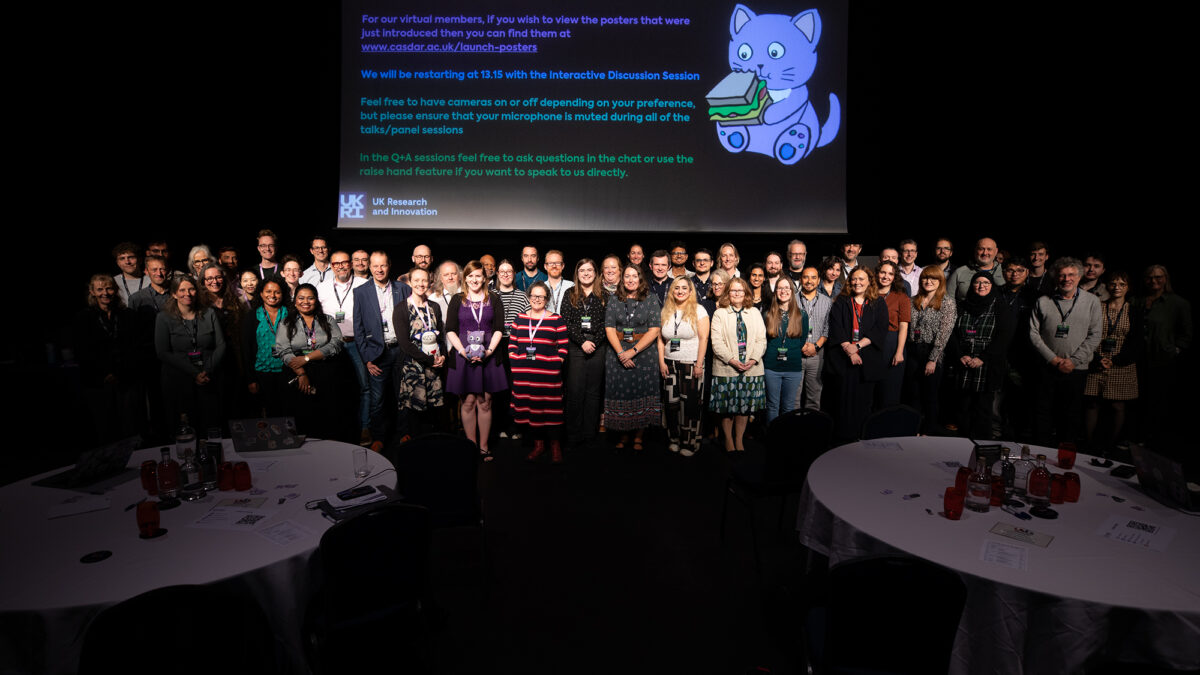
Figure 1: The CaSDaR community at our last conference
But the thing that we’re most excited about is the breakout sessions that we’re running on day two of the conference. We’ve organised five sessions for you lovely lot to let us know what you think we can do that might help you:
- Breakout room 1 – Career Frameworks: what should a framework for a Data Steward look like and how can we also promote the Data Stewardship work of aligned roles;
- Breakout room 2 – Skills and Training report: CaSDaR recently commissioned some work to identify where are the skills gaps for Data Stewards and individuals completing aligned work so we’re keen to see how this fits with others experiences;
- Breakout room 3 – Development of the Data Steward Association: we don’t just want to run a four year project then let the work disappear. So we’re keen to ensure that the work continues through developing an association for Data Stewards, so we’re keen to see what this looks like for our community members;
- Breakout room 4 – Funding: CaSDaR has another round of funding to go, so we’re hoping to get feedback on what matters to the community;
- Breakout room 5 – Community and Events: we want to hear from you about what you’ve enjoyed, what we should be doing more of, and if there’s anything we should be doing but we aren’t.
For more information and to book your tickets, check out our Eventbrite page.
An update from our Funded Projects
This summer, recipients of CaSDaR’s £5k and £70k project grants started their projects. We’re so excited to have started receiving news of some of their outputs:
- The recipients of the £5k project grant, Susana Sauret-Gueto and Qi Wang, sent us their report from their £5k project; in this project, they developed and piloted a metadata pipeline for laboratory sample management, using freezer collections as an initial focus designing and appropriate metadata standard and implementing it within an ELN;
- Michael O’Connor and Andrew Harrison from Queen’s University Belfast have published their work on supporting an institutional transition to a new repository infrastructure. The report and supporting data are available;
- Sarah Trinder and Clare Richter sent us their report describing their project, where they applied the principles of Data Stewardship to curating historical data, enabling data sharing; and
- Noam Tal Perry, Clair Castle, and Kim Clugston recently shared their interim report, describing their work to date on the £70 project that they received where they identified the skills associated with Data Stewardship and applied this to understand how Data Stewardship affects the outcomes of projects. They have shared the scripts they used in processing the data and more outputs are soon to follow.
We can’t wait to hear more about the rest of the projects during our conference!
Recent Publications
Here at CaSDaR’s offices, Cassie loves hearing about work that other groups have been doing, so we wanted to share a few of the recent releases that Cassie has enjoyed.
- CaSDaR’s PI, Samantha Pearman-Kanza, recently published a white paper in collaboration with Matthew Partridge on the process of implementing an ELN for sustainable stewardship. The work is presented as a practical guide and summarises her extensive expertise in embedding ELNs as practical and effective process recording. The full guide can be found here, and is recommended as a resource for Data Stewards, researchers, technicians, and decision makers alike.
- CaSDaR’s project partner, the UK Reproducibility Network (UKRN) recently published two outputs that will be relevant to the CaSDaR community. The first is about monitoring Data-Availability Statements and FAIR Data Practices in Medical Research Council (MRC)- Funded Research, where the report found that DataSeer provided a potential route for automation of monitoring Data Practices, and secondly Monitoring data sharing and FAIR practices with LLMs: a synthesis of expert views, which provides an insight that LLMs are likely to be extremely useful to support monitoring data practices, but can only be used in conjunction with other solutions.
- On the 22nd May 2026, Dr. Jeanne Wilbrandt presented on her career for the CaSDaR community via one of our Data Steward Stories webinar. Jeanne is an established Data Steward at the University of Vienna so she very kindly gave up her time to describe her career development and motivations, as well as answering questions that the community had. Jeanne’s talk was inspiring and a brilliant talk showing what is possible when the role of Data Steward is formalised. A report and recording of the session can be found on CaSDaR’s Zenodo community page.
Cassie’s Corner

After crying over submitted datasets with consent forms that state that data is going to be destroyed after ten years of retention, Cassie thinks that everyone should understand research data retention periods. Often, your employing organisation or your funder will have specific requirements for how long data from your research should be kept, and ’minimum’ is a key word here!
Where this can get confusing for researchers is when researchers have to consider the differences between storage of personal data and research data, and areas where these overlap such as potentially identifying information from aggregated dataset.
There is information readily available from the ICO of retention periods for the personal data that can be collected when taking consent. Retention periods for research data will often be set by funders or the organisation storing the data.
If you’re working with human participants it can be helpful to separate out the personal data that will be collected via the consent form and state how this will be stored, then address how the research data (as well as which ’type’ of data – raw data, processed data etc) can be stored in compliance with the policies of your funder and your institution.
Future Events
We’re very excited to announce some upcoming events, from us, project partners, and others that are relevant to the CaSDaR community:
- CaSDaR is pleased to announce that registration for our two day conference on the 17th-18th November 2026 is now open! Visit our website and on the Eventbrite page;
- CaSDaR has another episode of Data Steward Stories coming up! On the 26th October 2026, at 13:00-14:15, members of the University of Southampton’s Research Data team at the Hartley Library will discuss how their roles and experiences complement each other to support research data stewardship at the institution. More information can be found on the Eventbrite page;
- On the 30th September 2026, 14:00-15:30 BST, CLOSER is introducing their training via a webinar called ’Metadata Management in the real world’ for individuals who support management of metadata. This webinar aims to showcase their recently developed training and share their recent research on student understanding of metadata;
- The University of Southampton’s Library team will be represented at RLUK’s Digital Shift Forum webinar. The Digital Shift Forum webinars aims to bring together information professionals across sectors to discuss the future of digital shifts in information management. The webinar on the 30th September 2026, 14:00 – 15:00 GMT+1, features case studies from two institutions: the University of Southampton Library and the University of Leeds library. More information and registration is available on their Eventbrite page;
- The STEP-UP project has some free in-person training available throughout October and November that will be relevant to the CaSDaR community, including FAIR data, repository selection, and AI-assisted coding. Find more information on the event page of the STEP-UP website;
- CaSDaR’s project partners, the UK Reproducibility Network (UKRN) are hosting a webinar series on the future of Open Research. This will be hosted via the University of Sheffield and the first webinar, on the 22nd October 2026, 13:00 – 15:00, covers research data planning and review and features opportunities for participants to reflect on the recent STAR report recommendations. More information is available on the UKRN website;
- The Royal College of Nursing is hosting an essential webinar on the the use of data and statistics to introduce the concept of ‘normal’ in health. This webinar, featuring Sarah Chaney, will be on the 10th November 2026 at 18:00 – 19:30 GMT; tickets are available via Eventbrite;
- Another of CaSDaR’s project partners, ELIXIR-UK are hosting a webinar on the 6th October 2026, ‘Data Horror Stories: what core facilities see when FAIR goes wrong‘. Register to join;
- PSDI, another CaSDaR project partner, are having their annual showcase on the 25th-26th November 2026 in Southampton, to share their latest developments in the areas of research data, digital infrastructure, AI and machine learning, open science, and data-intensive physical sciences research. This event is suitable for researchers, technical specialists, data professionals, and funders amongst others; and
- CaSDaR’s project partners, DCC, are organising the 21st annual International Digital Curation Conference in Lisbon, Portugal on the 9th-12th February 2027. Registration is still open for papers, talks, and posters. Cassie looks forward to seeing people there!
We hope that you’re looking forward to these as much as we are!
About CaSDaR
The Careers and Skills for Data driven Research (CaSDaR) initiative is a 4-year UKRI funded project which aims to address this gap by helping to define the role of Data Stewards within the UK research landscape and advocating for their recognition and representation across institutions.
We plan to complete these goals by connecting existing networks that support and elevate Data Stewardship in the UK, coordinate with international networks to ensure that activities for Data Stewards in the UK remains in line with global progress in this area, and to provide funding for case studies that demonstrate the crucial role that Data Stewards play in the continued development of the UK research ecosystem.
If you would like to hear more then please check our website, join the CaSDaR mailing list to keep up to date, follow us on LinkedIn, and email casdar@soton.ac.uk for more details.